Thanksgiving travelers will pay sharply more to fly and fill up this year, even as the total number of Americans hitting the road dips just below last year's record.
AAA projects 81.5 million people will travel at least 50 miles from home between Tuesday, Nov. 24, and Monday, Nov. 30, according to its Thanksgiving travel forecast released Nov. 16. That is about 121,000 fewer travelers than last year's 81.6 million, a 0.1% decline that ends a three-year streak of record Thanksgiving travel.
For Washington state drivers, the squeeze is real. The state's average gas price sat at $4.74 per gallon as of Nov. 19, making it the fourth most expensive market in the country, according to AAA's gas price tracker. The national average stood at $3.72, more than 60 cents higher than the same time last year.
Airfare hits $800 on AAA bookings
Round-trip domestic flights booked through AAA are 17% more expensive than last year, averaging $800 per ticket, according to AAA data based on what travelers paid when booking their Thanksgiving trips. AAA projects 5.96 million Americans will fly domestically for the holiday, a 0.2% decrease from 2025.
AAA spokesperson Aixa Diaz told Surround Sound News that the $800 figure reflects a specific slice of the market. "$800 is the average total price our members paid when booking their Thanksgiving plans through us," Diaz said. "Most people who book through AAA Travel are going on trips to desirable, in-demand destinations, and those tend to be more expensive."
For travelers looking to cut costs, Diaz offered Thanksgiving-specific advice: "Booking Thursday-Saturday flights is a good option. Flexibility is a traveler's best friend, so if you can fly out on Monday and stay until the following Tuesday, even better. Those days won't be as busy or expensive."
Diaz added that travelers without fixed schedules should consider the week after Thanksgiving. "It's post-Thanksgiving but pre year-end holidays," she said.
AAA's general booking tips also suggest checking secondary airports and flying on Tuesdays and Wednesdays, which tend to be cheaper than weekend departures.
Gas prices could set Thanksgiving record
Nearly 72.9 million Americans are expected to drive, down from 73.1 million last year. AAA attributed the decrease partly to record-high gas prices in August, September and October.
The national average has never topped $4 per gallon on Thanksgiving Day. The previous high was $3.58 in 2022. As of Nov. 19, AAA said it was possible the national average could drop another 15 cents by Thanksgiving, which could keep prices below a new record. Crude oil had fallen to the low $80-per-barrel range, helping push pump prices down.
Still, Washington drivers are paying well above the national average. Gas station loyalty programs can help. AAA noted that members save per gallon at Shell and Love's stations. Packing food for the trip, whether driving or flying, is another way to trim costs.
I-5 congestion: what Olympia drivers should expect
AAA's forecast, using data from transportation analytics firm INRIX, does not include a specific Olympia or Tumwater traffic projection. The closest listed metros are Seattle and Portland, both connected to Olympia by Interstate 5.
"We have data for these major metro areas in the release, and we include the expected increase over regular traffic," Diaz said.
INRIX projects the Seattle-to-Bellingham route on I-5 North will see peak congestion on Tuesday, Nov. 24, at 6:45 p.m. PT. The estimated trip time is 3 hours and 31 minutes, an 83% increase over typical conditions. The Eugene-to-Portland stretch of I-5 North peaks on Wednesday, Nov. 25, at 4:45 p.m. PT, with an estimated 2 hours and 56 minutes of travel time, a 64% increase.
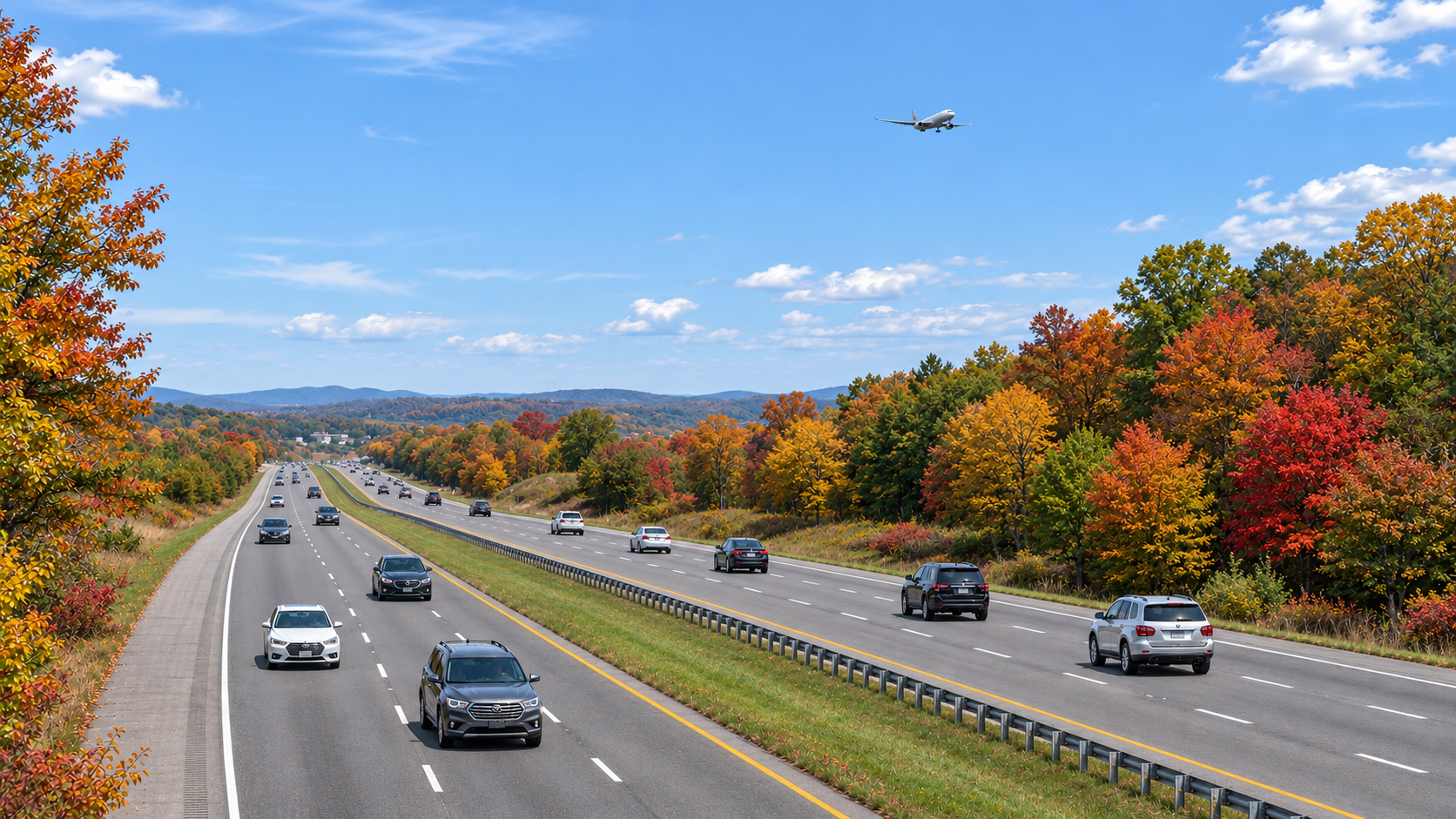
Across all metros, INRIX expects the heaviest traffic on Tuesday and Wednesday before Thanksgiving and on Sunday and Monday afterward. The worst congestion falls in the afternoon and early evening.
When to drive
Drivers who can leave in the morning will avoid the worst backups. Here are the best and worst windows for the holiday week:
- Tuesday, Nov. 24: Worst 2–8 p.m.; best before 1 p.m.
- Wednesday, Nov. 25: Worst noon–7 p.m.; best before noon
- Thursday, Nov. 26: Minimal traffic expected
- Friday, Nov. 27: Worst 1–7 p.m.; best before noon
- Saturday, Nov. 28: Worst noon–9 p.m.; best before 11 a.m.
- Sunday, Nov. 29: Worst noon–8 p.m.; best before 11 a.m.
- Monday, Nov. 30: Worst 2–7 p.m.; best before 1 p.m.
"After three years of record highs, the number of travelers is slightly lower partly because of higher travel costs this year," said Stacey Barber, vice president of AAA Travel. "But travelers won't notice much of a difference on the roads and at the airports, since projected volumes remain near record levels."
AAA responded to more than half a million roadside calls last Thanksgiving for flat tires, dead batteries and other emergencies. The organization recommends checking tires, batteries and fluids before leaving town.