Four Thurston County organizations will split $1.08 million in state grants to restore salmon habitat on local waterways.
The Washington State Salmon Recovery Funding Board announced the awards Thursday, Sept. 17, as part of a $21.5 million statewide package covering 75 projects in 27 counties. The Thurston County share will fund wetland replanting, wood placement in the Deschutes River, a culvert study and creek restoration.
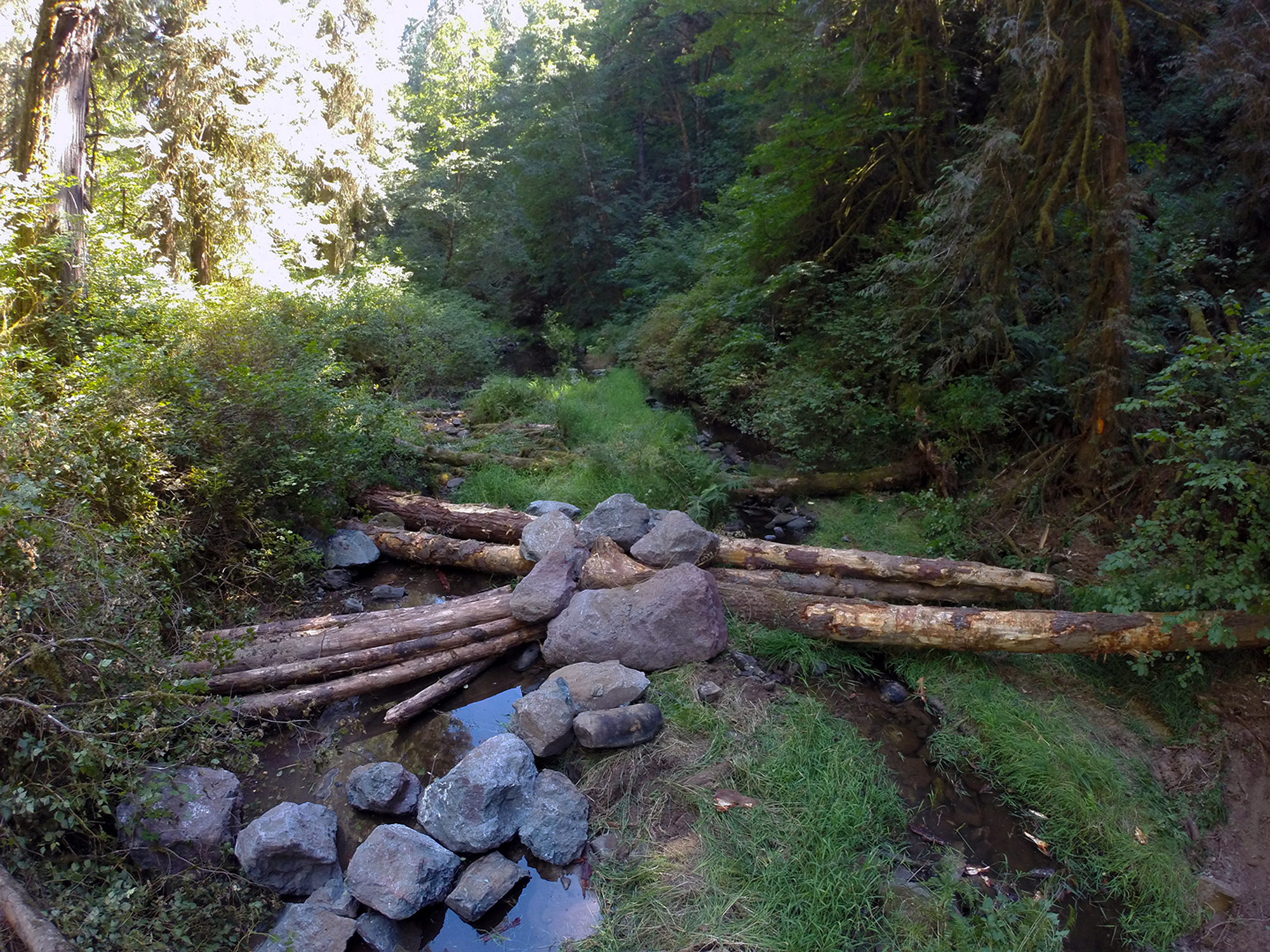
The largest local grant, $446,358, goes to the South Puget Sound Salmon Enhancement Group, according to project descriptions published by the Daily Chronicle. Crews will place logs and root wads along 1.5 miles of the upper Deschutes River and a quarter-mile of Thurston Creek. The added wood creates resting and hiding spots for fish, slows the current to reduce erosion and helps gravel settle into spawning beds for steelhead trout and coho salmon.
The Thurston Conservation District received $340,631 to restore the Scatter Creek headwaters in the Cozy Valley wetland. That wetland was drained for farming long ago, and the creek now dries up in summer. Crews will build beaver-dam-like structures to slow water, raise the water table and plant trees to shade the creek.
Coho salmon have been found in the valley. The nonprofit Heernett Foundation will host field trips for the Tenino School District as part of the project.
The Nisqually Land Trust received $160,490 to control invasive plants and replant 27.5 acres of the lower Powell Creek wetland with native shrubs, trees and conifers. Powell Creek provides spawning and rearing habitat for Chinook salmon, steelhead trout and bull trout, all listed as threatened under the federal Endangered Species Act (ESA).
Thurston County Public Works received the smallest grant, $135,000, to study how to fix a culvert where an unnamed Independence Creek tributary crosses under Backman Road. The pipe sits too high above the creek, limiting fish access to nearly five miles of upstream spawning and rearing habitat. The grant funds a design study, not construction.
"These grants are for projects to give salmon the clean, cold and plentiful water they need to survive," Jeff Breckel, chair of the Salmon Recovery Funding Board, said in the announcement.
"We're moving rivers, adding logs to streams to slow the water and create habitat and removing barriers so salmon can swim to the ocean and back."
Megan Duffy, director of the Washington State Recreation and Conservation Office (RCO), which staffs the board, said the grants go through a rigorous screening process. Local communities prioritize and review projects for scientific validity before they compete regionally for funding.
Fourteen populations of salmon and steelhead are listed under the ESA statewide.
Funding came from the board's Salmon Recovery Program, its Riparian Grant Program, the federal Pacific Coastal Salmon Recovery Fund and the state Climate Commitment Act.
No construction timelines have been announced for any of the four Thurston County projects.