Sixty pairs of great blue herons are raising chicks in the towering pines at Capitol Way North and B Avenue Northeast, a thriving urban colony just steps from the Olympia Farmers Market.
The 120-plus adults represent a strong nesting season for the downtown Olympia rookery, and mid-July through mid-August is the best time to see them.
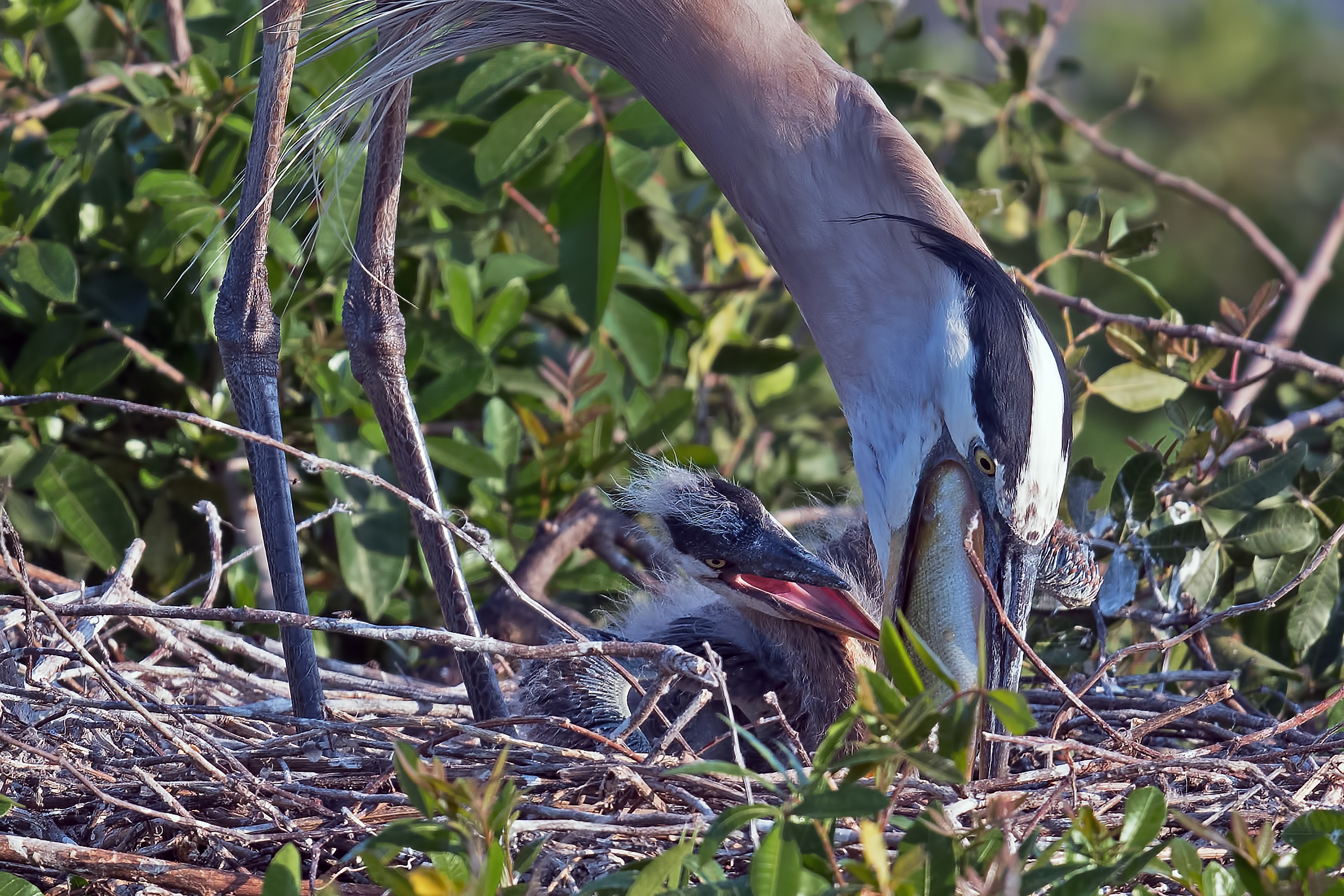
Allison Anholt, the Washington Department of Fish and Wildlife's shorebird and colonial waterbird species lead biologist, said most chicks have reached what she calls their "dinosaur stage, where they just really look prehistoric and scraggly, and pretty cute."
Nesting season began in early April, and Anholt estimated in mid-July that it would last through roughly mid-August. Unlike many bird species, great blue herons don't all nest at the same time, so visitors may spot brand-new hatchlings alongside fledglings nearly ready for flight.
Why downtown works for herons
The tall pines give the birds height above predators and easy access to nearby waterways for fishing. The colony also benefits from an unlikely ally: traffic.
Ground predators like raccoons have to cross Capitol Way's busy lanes to reach the nests, Anholt said, adding an extra buffer the birds wouldn't get in a remote forest.
As colonial nesters, herons cluster together for safety in numbers. Anholt explained that with hundreds of nests grouped tightly, any single pair faces lower odds of being targeted by airborne hunters like bald eagles.
George Walter, environmental program manager at the Nisqually Indian Tribe's natural resources department and a birder with more than 45 years of experience, independently called the rookery the top entry on his list of "unexpected Olympia breeding birds" in a July 8 column for The JOLT News.
How to watch
Anholt recommends arriving at dawn or dusk, when adult herons leave to forage or return with food for their young. The birds are most active and visible during those windows.
A few ground rules: Don't walk directly under the pines unless you want to wear bird droppings. Keep enough distance that the herons don't change their behavior. If you're causing a bird to alter what it's doing, you're too close, Anholt said.
If you find a fallen chick
Urban nesting means chicks sometimes end up on the sidewalk. Anyone who finds one should contact a permitted wildlife rehabilitator through WDFW rather than handling the bird themselves.
The Olympia Farmers Market, at 700 Capitol Way N, is open Thursday through Sunday, 10 a.m. to 3 p.m., through October.
The rookery is visible from the market area and surrounding sidewalks, and Anholt expects the viewing window to close around mid-August when the last fledglings take flight.