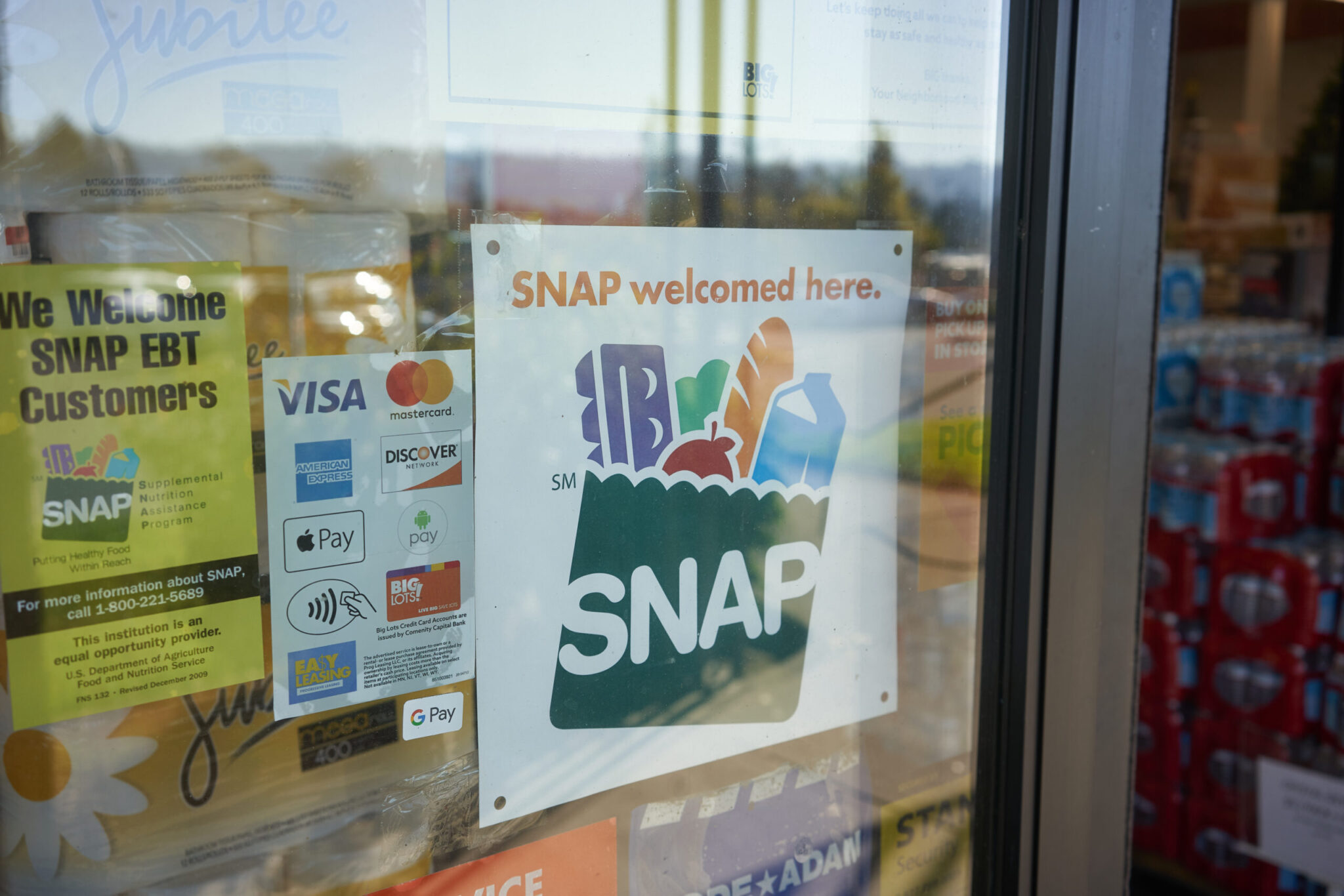
A new federal penalty on food stamp errors will cost Washington more than $90 million a year starting in October 2027.
The Department of Social and Health Services (DSHS), which administers the Supplemental Nutrition Assistance Program in Washington, reported a 6.98% payment error rate for federal fiscal year 2025, according to data the U.S. Department of Agriculture released June 24.
That rate places Washington in the lowest penalty bracket under President Donald Trump's reconciliation package, commonly called the "big, beautiful bill," but still above the 6% threshold that would have spared the state entirely.
Government jobs account for about one-third of all employment in the Olympia-Lacey-Tumwater metro area.
Of 133,100 total nonfarm jobs in the region as of May 2026, roughly 44,600 were in government, according to preliminary Bureau of Labor Statistics data. DSHS alone employs about 17,500 people statewide; the agency is headquartered in the Olympia area, but does not publish a local headcount.
The connection between federal SNAP funding and local paychecks is not abstract. In fall 2025, hundreds of DSHS employees who process SNAP benefits received temporary layoff notices effective November 4, according to the Washington Federation of State Employees.
"Our members ensure food is on the table for thousands of families every day," WFSE president Mike Yestramski said at the time.
Under the new law, states with error rates between 6% and 8% must cover 5% of SNAP benefit costs. For Washington, that amounts to more than $90 million annually, according to DSHS. If the error rate climbs above 8%, the bill rises to nearly $200 million; above 10%, nearly $300 million.
States may choose between their fiscal year 2025 and 2026 error rates to set the initial payment level. In later years, penalties will be based on the rate from three years prior.
Washington's 6.98% rate is well below the national average of roughly 10.6%. DSHS spokesperson Norah West said the state "consistently outperforms the national SNAP payment error rate average, thanks to the hard work of our employees."
West added that the agency continues working to push the rate below 6%.
The state's 2026 supplemental budget added about six quality-control staffers at DSHS focused on reducing errors. Lawmakers also approved more than $45 million to cover SNAP administrative costs the federal government previously paid, and $44 million to maintain benefits for immigrants who lost federal eligibility.
Claire Lane, director of the Seattle-based Anti-Hunger and Nutrition Coalition, warned that new SNAP work requirements in the same law could push Washington's error rate higher by adding administrative complexity.
Lane said the requirements will also cause thousands of residents to lose food benefits not because they are ineligible, but because of paperwork barriers.
More than 908,000 Washingtonians received SNAP benefits as of March 2025, the most recent federal figure available. That represented about 11% of the state's population.
The first penalty payments are due in October 2027. Between now and then, DSHS must hold or lower its error rate while implementing the new work requirements that advocates say make accuracy harder to maintain.