
Thurston County's overdose death rate has fallen roughly 14 percent from its 2022 peak, county officials told commissioners on Aug. 18, but they warned that unstable government funding could erase the progress.
The county's age-adjusted overdose mortality rate for all drugs hit 42.9 per 100,000 people in 2022. It dropped to 39.2 in 2023 and 38.8 in 2024, according to the Washington State Department of Health's Opioid and Drug Use Data Dashboard. A separate preliminary figure covering a rolling 12-month window from June 2025 through June 2026 puts the rate at about 36.8 per 100,000.
That number is not directly comparable to the finalized annual rates but suggests the downward trend is continuing.
"We're in a hot spot for drugs to begin with, and so for us to move from the top of the list to the middle of the list means that we're doing things right in our community," Opioid and Overdose Response Program Manager Katie Strozyk told commissioners at the work session, as reported by The Olympian.
Thurston County once ranked near the top of Washington counties for overdose deaths. It now sits closer to the middle, Strozyk said.
Naloxone kits doubled in a year
Officials credited the decline to harm reduction programs, particularly the county's Syringe Services Program.
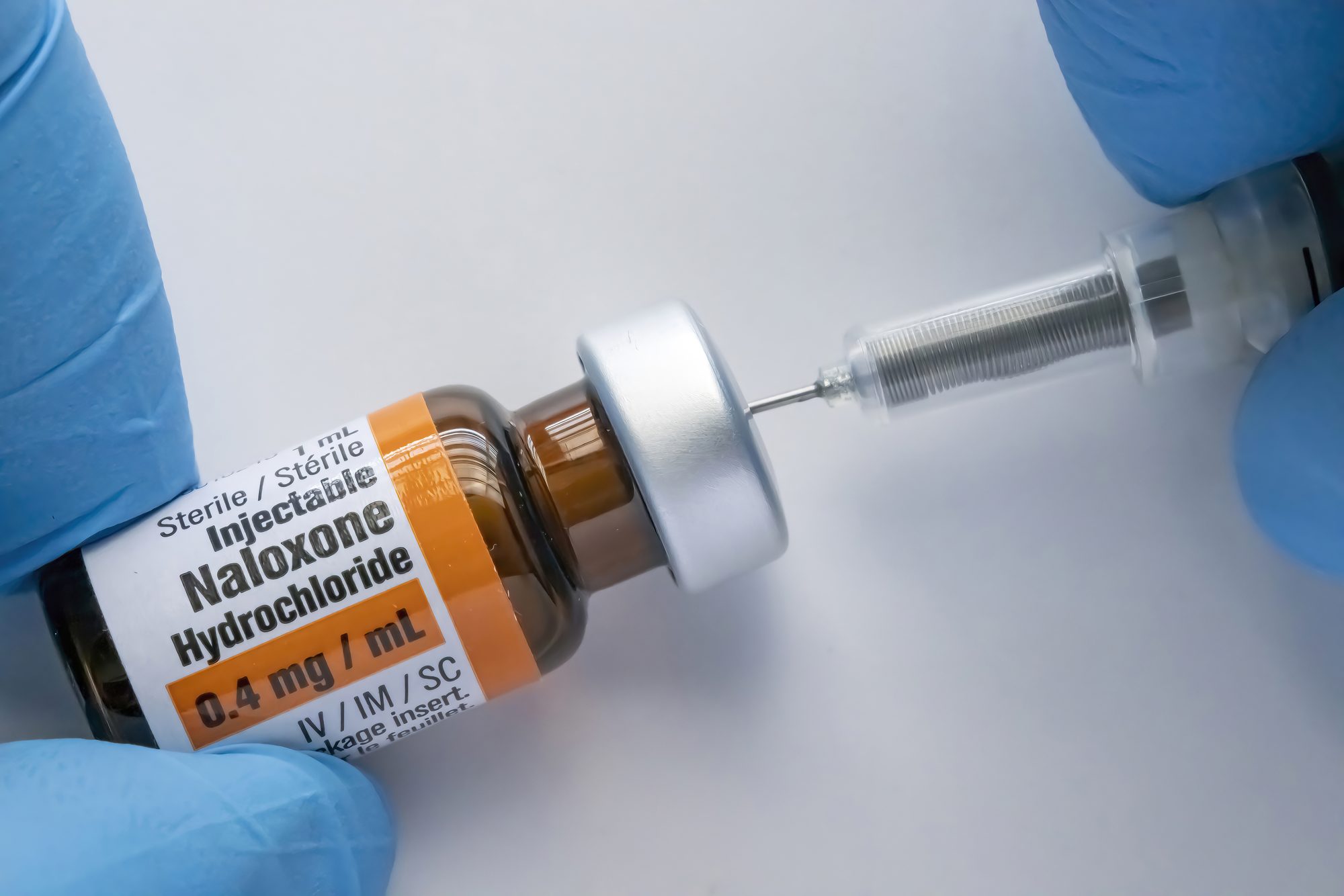
That program distributed 1,784 naloxone kits in 2024, then more than doubled output to 3,770 kits in 2025. In just the first half of 2026, it has already handed out 3,612 kits.
Across all community agencies partnering with the state Department of Health, 22,416 naloxone kits were distributed countywide in 2025. Each kit contains two doses of the overdose-reversing drug.
The naloxone supplied through the Syringe Services Program costs local taxpayers nothing. It is provided in-kind by the Washington State Department of Health.
The program also reported 427 self-reported overdose reversals in 2024 and 270 in 2025. Emergency department visits for opioid overdoses at Providence St. Peter Hospital, MultiCare Capital Medical Center and MultiCare Emergency in Lacey appeared to decline between April 2024 and April 2026, with 890 total visits during that two-year window.
Funding threat
Director of Emergency Services Ben Miller-Todd told commissioners that cuts to federal, state or local funding could undo the gains. He said removing funding for the county's initiatives would be "very impactful" to both services and the progress made so far, though he did not name specific grants or dollar amounts at risk.
Officials also noted that changes in the local drug supply played a role in the trend. When fentanyl first entered the market, fatal overdoses spiked sharply. The supply has since stabilized, as has fentanyl's potency.
Final 2025 mortality numbers are not yet available. Toxicology reports can take four to six months to finalize, Strozyk said. Public Health and Social Services Director Jen Freiheit said the department will continue tracking emergency department visit rates alongside the mortality data as new numbers come in.