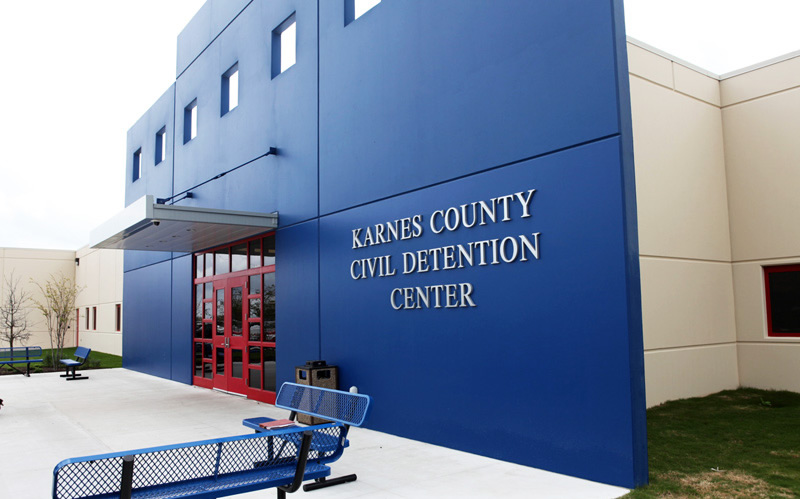
No new jails, immigration detention centers, or other involuntary-confinement facilities can be permitted anywhere in unincorporated Thurston County for at least a year, under an ordinance the Board of County Commissioners adopted on June 16.
The ban is immediate.
Ordinance No. 16635 halts the filing, acceptance, processing, or approval of any permit application to establish, site, or expand a public or private detention facility across all zoning designations in unincorporated areas.
It runs through approximately June 16, 2027, or until the county writes permanent siting regulations, whichever comes first.
Residents can weigh in at a required public hearing on August 5 at 3:30 p.m. in Room 110 of the Thurston County Atrium Building, 3000 Pacific Ave. SE, Olympia.
The meeting will also be livestreamed on the Thurston County YouTube channel.
Why the moratorium
The ordinance traces directly to a December 2025 U.S. Department of Homeland Security pre-solicitation notice seeking a private contractor to build and operate an immigration detention facility in the greater Seattle region.
Thurston County was among the areas that could be affected, according to the county's supporting documents.
The commissioners began evaluating local land-use controls in March 2026, according to a county press release issued July 7. The moratorium aligns Thurston County with similar actions taken earlier this year by King County and Pierce County.
Seattle, Tukwila, SeaTac, Renton, and Kent approved parallel measures in March, according to Axios Seattle, all responding to the same federal solicitation.
The ordinance also cites an immigration detention facility in Tacoma as evidence of the community and land-use impacts such facilities can impose, including ongoing disputes over compliance with state and local health and welfare requirements.
What the county code lacks
County planners identified significant gaps in Thurston County Code Titles 20 through 23. The existing code does not define correctional or detention facilities, does not identify them within rural zoning districts, and lacks facility-specific criteria or predetermined standards for such uses.
The county also noted that detention and involuntary-confinement facilities are frequently tax-exempt, reducing local tax capacity while imposing continuing service demands on host communities.
What's exempt
The moratorium does not apply to hospitals, behavioral health facilities, crisis recovery centers, or substance use treatment programs.
According to the county's July 7 press release, the moratorium also will not affect private residential facilities for sex offenders, halfway houses for juveniles, or Tribal facilities, which fall under different codes.
What happens next
Ashley Arai, director of Community Planning and Economic Development, will present the item at the August 5 hearing. The county has laid out a five-phase work plan to develop permanent regulations:
- Code and policy review: June–July 2026
- Development of regulatory options: July–September 2026
- Public outreach and agency coordination: September–November 2026
- Draft regulations and environmental review: November–December 2026
- Review and adoption by the Planning Commission and Board: January–June 2027
How to comment
Residents can submit comments online at surveymonkey.com/r/8JYZF26, email Senior Planner Ana Rodriguez at [email protected] by noon on Wednesday, August 5, attend via Zoom with pre-registration through the county's Meetings, Hearings, and Agendas page, or testify in person at the 3:30 p.m. hearing on Wednesday, August 5.